Want Your Dog to Have Easier Grooming Appointments? Two Professional Groomers Share What Actually Helps…
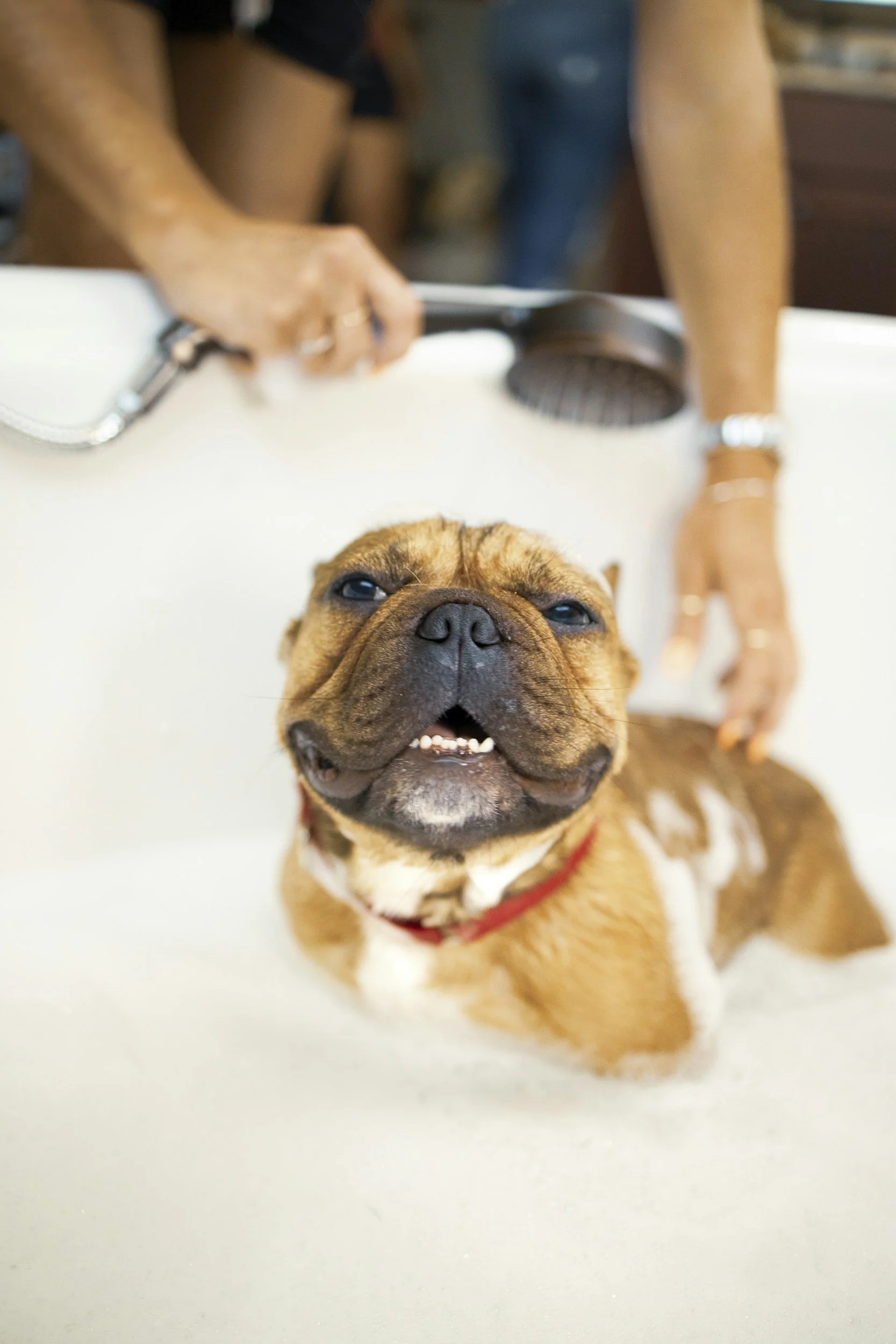
Grooming starts long before your dog walks into the salon
If your dog isn't exactly thrilled about having their paws touched, thinks the hairdryer is a household enemy or turns into an Olympic gymnast the second someone tries to trim their nails, you're definitely not alone.
But here's something I think more dog owners need to hear:
A successful grooming appointment doesn't start when you hand your dog over to the groomer. It starts at home.
As a dog trainer, I'm a huge advocate for helping dogs become comfortable with handling, new environments and everyday experiences before we desperately need them to cope with them. And grooming is a perfect example.
So, rather than just giving you my perspective, I asked two professional dog groomers what they actually see from the other side of the grooming table…
I spoke to Deb from Hair Off The Dog in Blakedown and Mollie from Hot Dogs Grooming in London about what owners can do at home, the behaviours they commonly struggle with and the things they wish more dog owners understood.
And there was a LOT of crossover in their answers.
1. Don't wait until your puppy needs a haircut
This was one of Deb's biggest pieces of advice.
If you've got a puppy who will eventually need regular professional grooming, take them to the salon before they actually need a full groom.
A puppy introduction can simply be about experiencing the environment.
New smells. Strange noises. Standing on a grooming table. Someone touching their feet. The sound of dryers or clippers. Being handled by somebody other than their owner.
Nothing particularly dramatic needs to happen.
That's actually the point.
You're giving your puppy opportunities to learn:
“I've been here before. Nothing scary happened. I can cope with this.”
Deb also recommends making sure dogs are comfortable being away from their owners. Separation anxiety can make an already unfamiliar grooming environment much harder for a dog to cope with.
This is one of those situations where prevention is considerably easier than trying to undo fear later.
2. Practise handling at home — especially the feet!
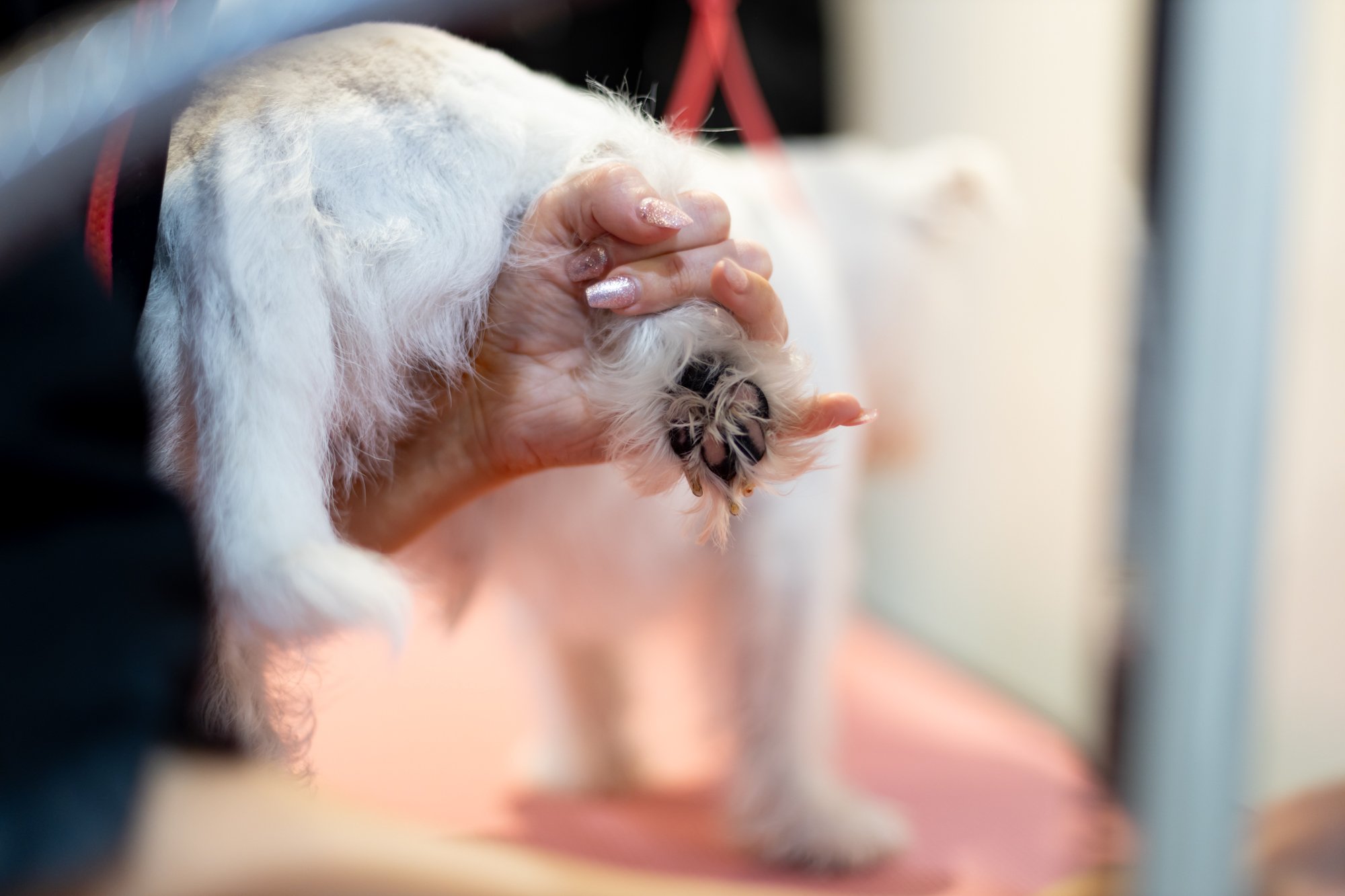
There was one body part that came up again and again: FEET!
Mollie told me:
“If we had a penny for every time a dog didn't like having their feet touched or their nails clipped, we'd be rich!”
During a groom, your dog may need someone to hold their paw, trim around it, clear hair between their pads and clip their nails. If the first time anyone really holds your dog's foot is when a groomer needs them to keep it still while holding equipment, that's a pretty big ask. Instead, make handling part of normal life.
Gently practise:
🐾 Touching and holding paws
👀 Handling around the eyes
👂 Touching ears
🦵 Handling legs
🐶 Gently supporting underneath the chin
✋ Looking between toes
Keep sessions very short and positive.
Touch → reward.
Paw held briefly → reward.
Look in an ear → reward.
You're not trying to pin your dog down until they “get used to it”. You're teaching them that being handled predicts something good.
Deb specifically mentioned practising holding underneath your dog's chin. Groomers sometimes need to stabilise a dog's head safely while working around delicate areas such as the eyes, so being comfortable with this type of handling can be incredibly useful.
3. Grooming salons are NOISY
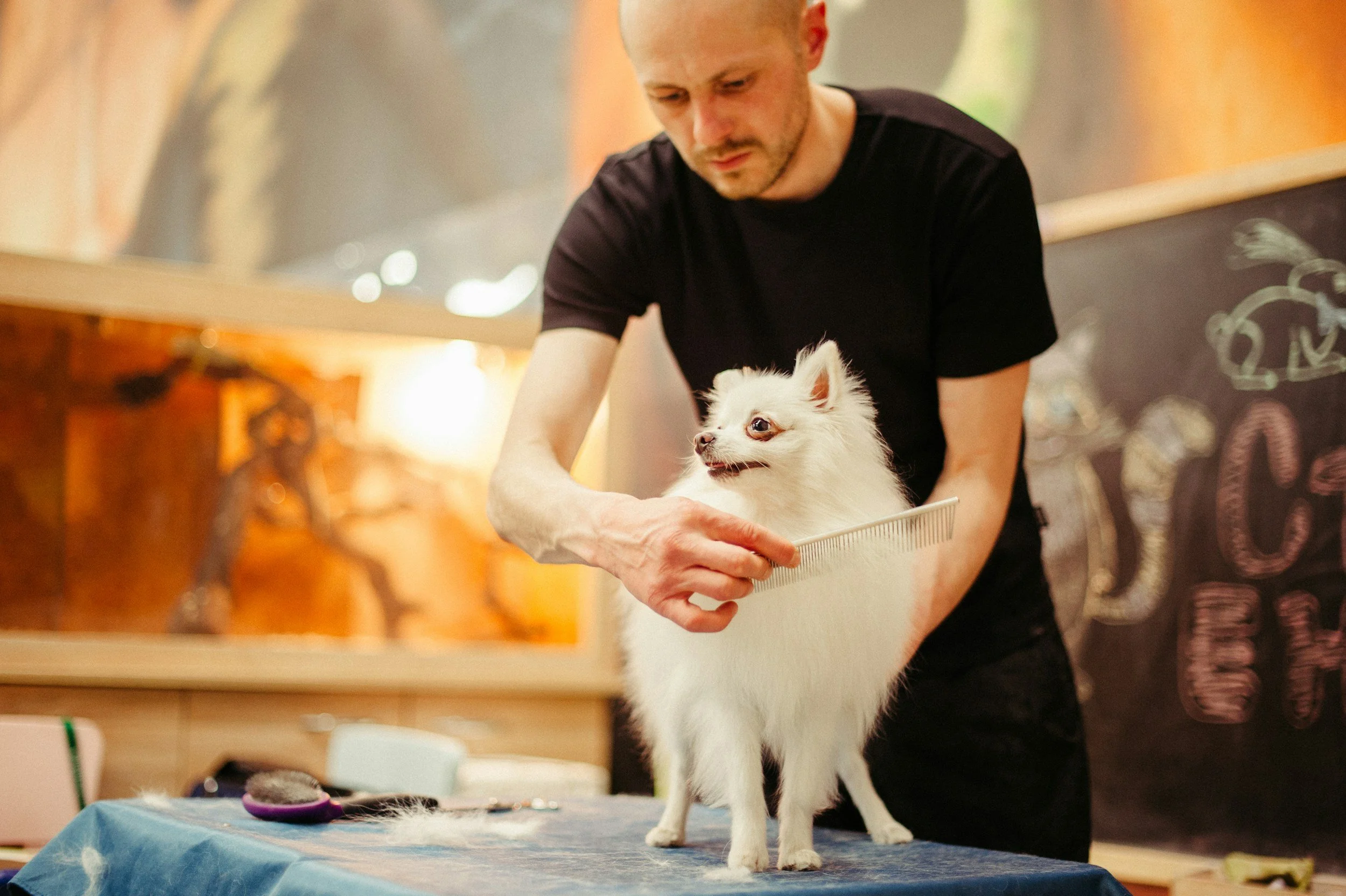
Another thing owners may not appreciate is just how strange a grooming salon can sound to a dog.
Dryers. Clippers. Water. Other dogs. People moving around. Equipment switching on and off.
Deb regularly sees reactivity to noise, and Mollie recommends gradually introducing puppies to similar sounds at home.
And you don't need to buy professional grooming equipment. A hairdryer, electric toothbrush or beard trimmer can help introduce similar sounds.
Start at a distance and at an intensity your dog is comfortable with, pair the sound with something positive, like treats, and build up gradually.
If your dog is frightened, you're too close or progressing too quickly. The aim isn't to make them tolerate something terrifying, it's to make the sound increasingly boring to them.
4. What looks like “bad behaviour” may actually be stress
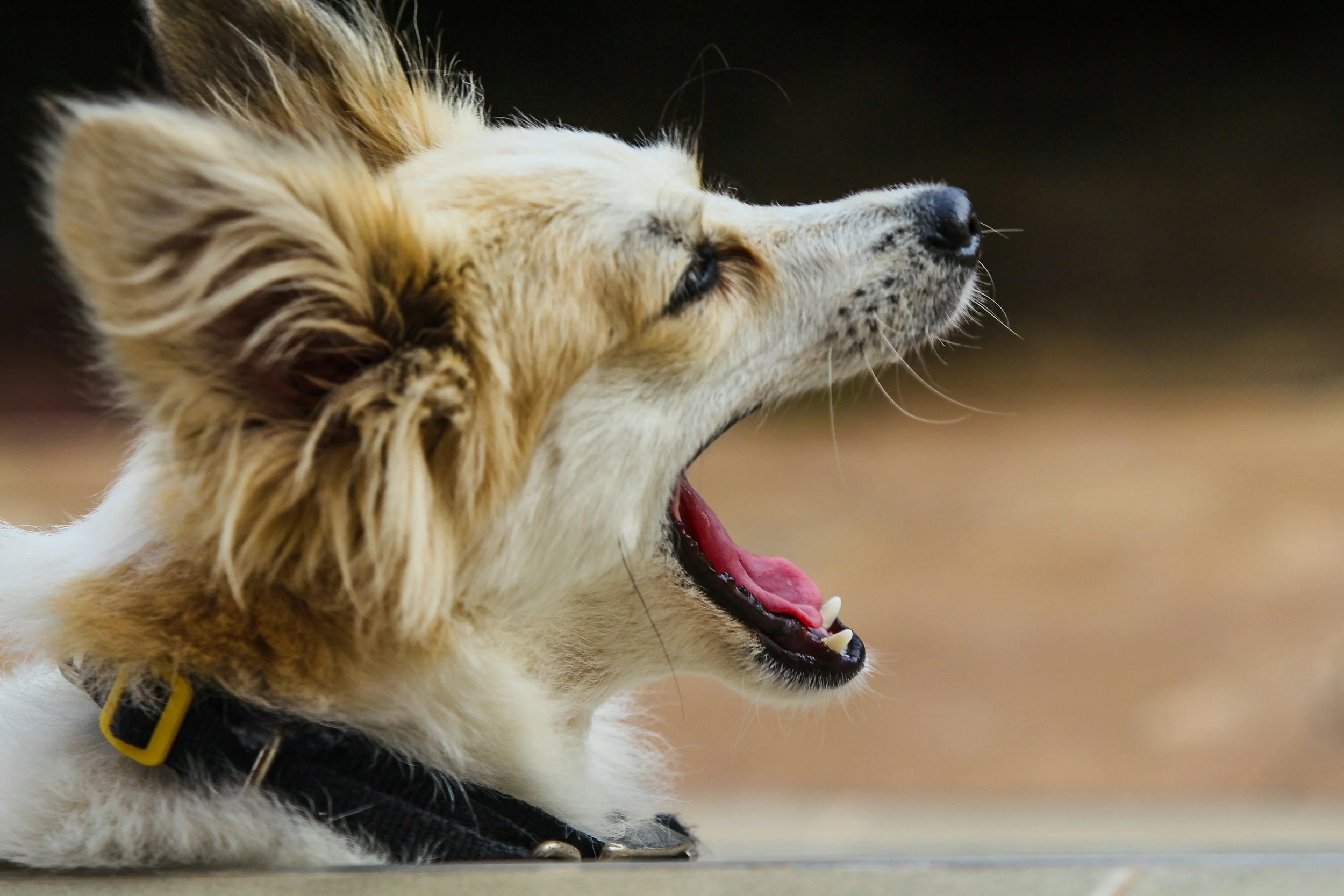
This is probably one of the most important points from Deb's answers.
When I asked about the most common behaviour she sees during appointments, her answer was: stress.
Panting. Slobbering. Whining. Constant movement.
Dogs aren't necessarily trying to be difficult, they may simply be struggling with the experience.
Mollie says she sees the same thing, particularly when groomers reach for dogs' feet. Dogs who were previously coping may begin wriggling, pulling their paws away or trying to end the interaction. And this is where understanding our dogs matters.
Repeated positive experiences, patient handling and appropriate training can gradually build confidence. Some dogs may never love every element of grooming — and that's okay! Our job is to help make the experience as predictable and manageable for them as possible.
5. Your groomer shouldn't be the only person maintaining your dog's coat
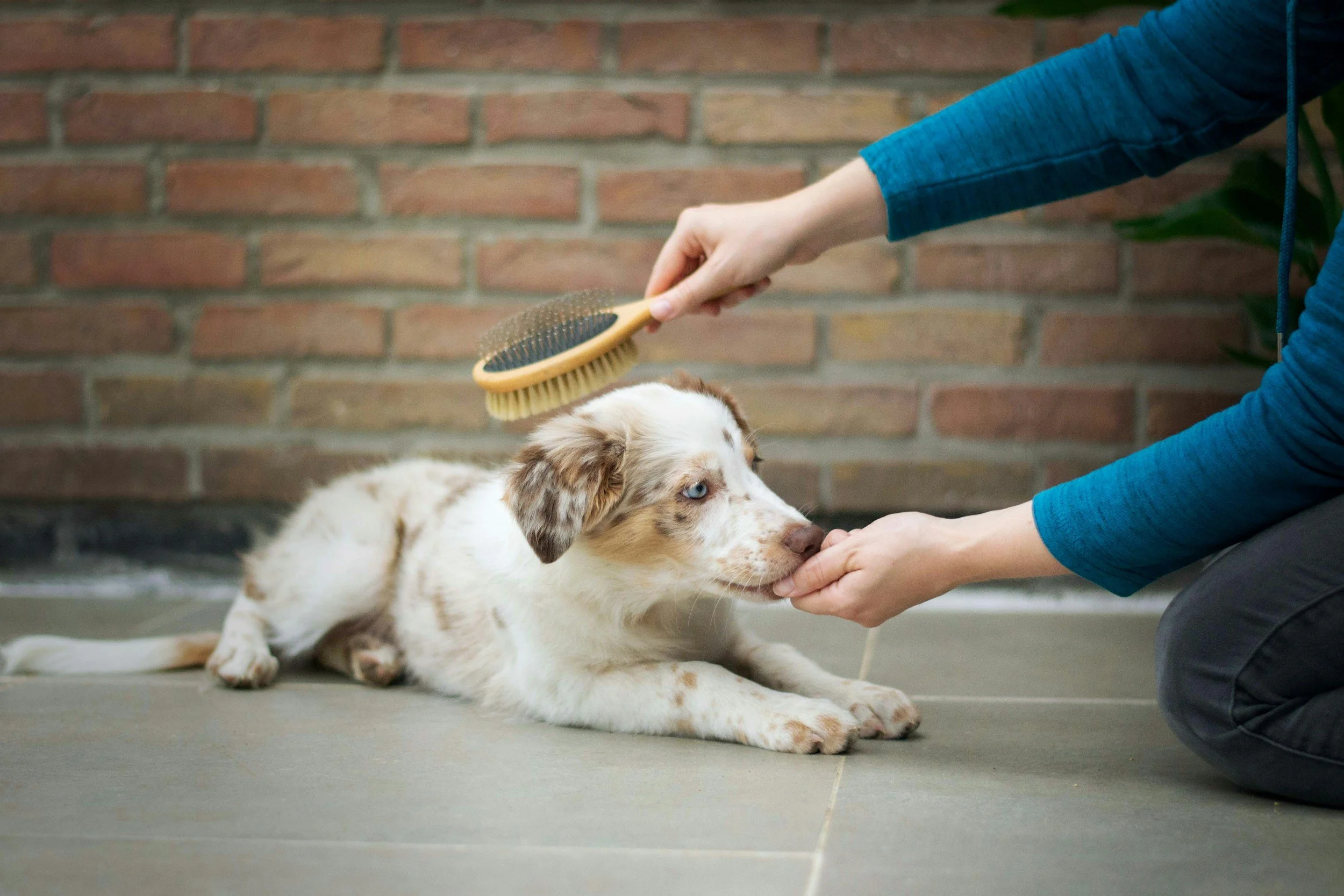
Another misconception both groomers highlighted is what happens between appointments.
For dogs with coats prone to matting, professional grooming every six or eight weeks doesn't necessarily replace home maintenance.
Mollie explained that groomers can often tell which dogs are regularly brushed at home — both from their coat condition and their behaviour.
Deb also highlighted matted coats as a common difficulty, particularly when owners aren't brushing regularly. And matting isn't simply an aesthetic problem. Tight matting can be uncomfortable and, in severe cases, painful.
If you're unsure what your dog's particular coat requires, ask your groomer to show you.
Ask which brush or comb they recommend, how often you should use it and — importantly — how to check you're brushing right through the coat rather than just over the surface.
6. Grooming isn't just for fluffy dogs
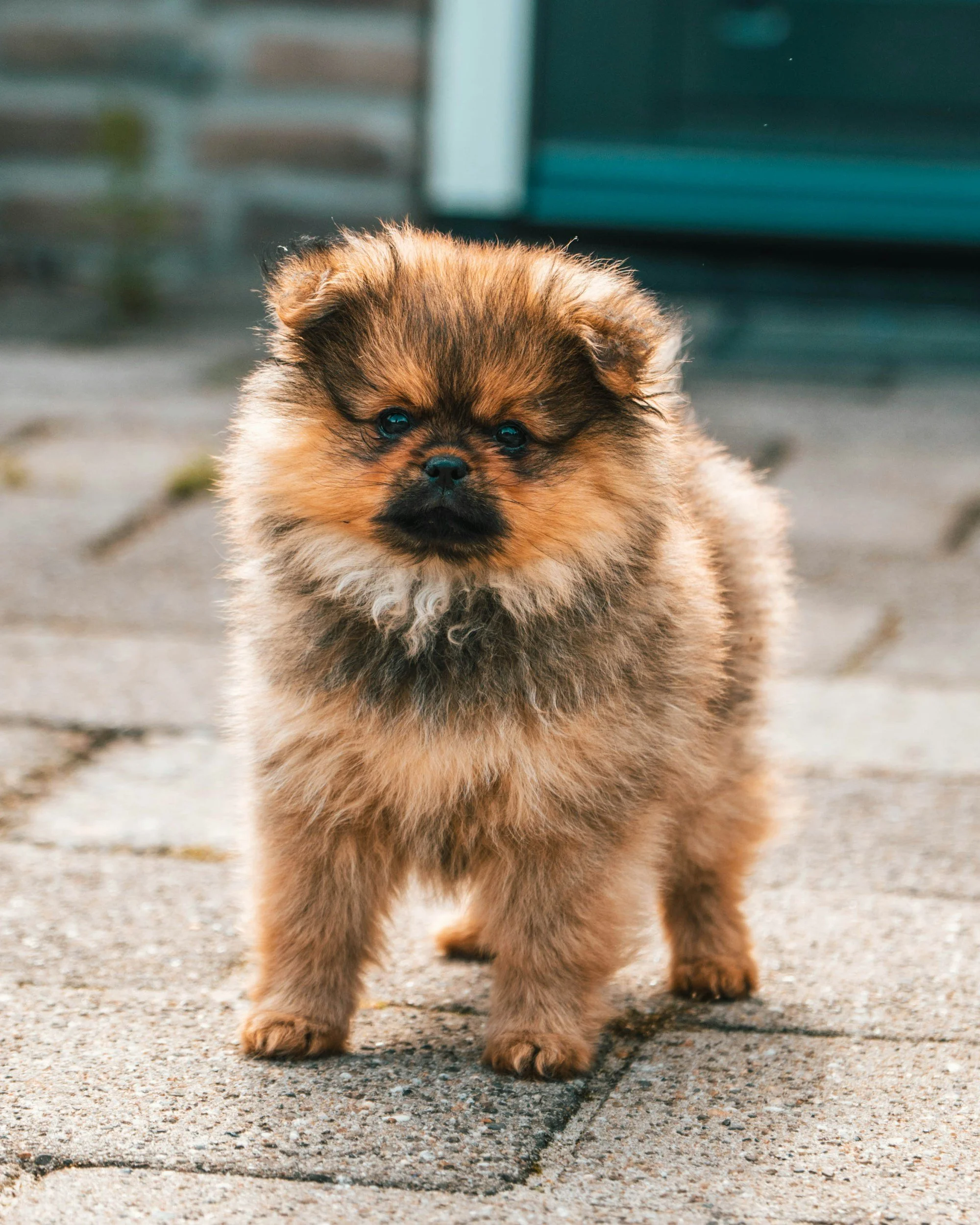
Labradors, I'm looking at you (and I say that because I have two Labradors) 👀😂
One misconception Mollie regularly hears is that only curly or long-haired dogs need grooming.
Short-coated breeds can benefit too.
Depending on the individual dog, professional grooming can include bathing, de-shedding, nail care, ear care and general coat maintenance.
And grooming isn't purely about making your dog look Instagram-ready. It's part of their general care.
Regular grooming can also give owners and groomers an opportunity to notice changes such as skin problems, lumps, parasites or ear issues that might otherwise have gone unnoticed.
One surprisingly simple thing you can do before an appointment
Give your dog an appropriate opportunity for exercise and toileting beforehand.
Mollie finds that dogs arriving with lots of pent-up energy can be more restless or excitable during their appointment. A walk, sniff and chance to toilet beforehand may help some dogs arrive more settled.
That doesn't mean exhausting or overstimulating them immediately before walking through the door — just meeting their needs first.
The biggest takeaway?
What struck me most when speaking to both Deb and Mollie was that good grooming isn't just about coat care. It's also about confidence.
A dog who has gradually learned that people can touch their paws, hold their chin, examine their ears, make strange noises and briefly separate them from their owner is being given a much better toolkit for coping with grooming.
And that's where grooming and training overlap beautifully.
Don't wait until your dog needs to tolerate something before teaching them how.
Start small. Keep it positive. Reward generously. And if your dog is already struggling, speak to your groomer about how you can work together to make future visits easier.
A huge thank you to Deb at Hair Off The Dog in Blakedown and Mollie at Hot Dogs Grooming in London for sharing what they see every day from the other side of the grooming table. 💜🐾
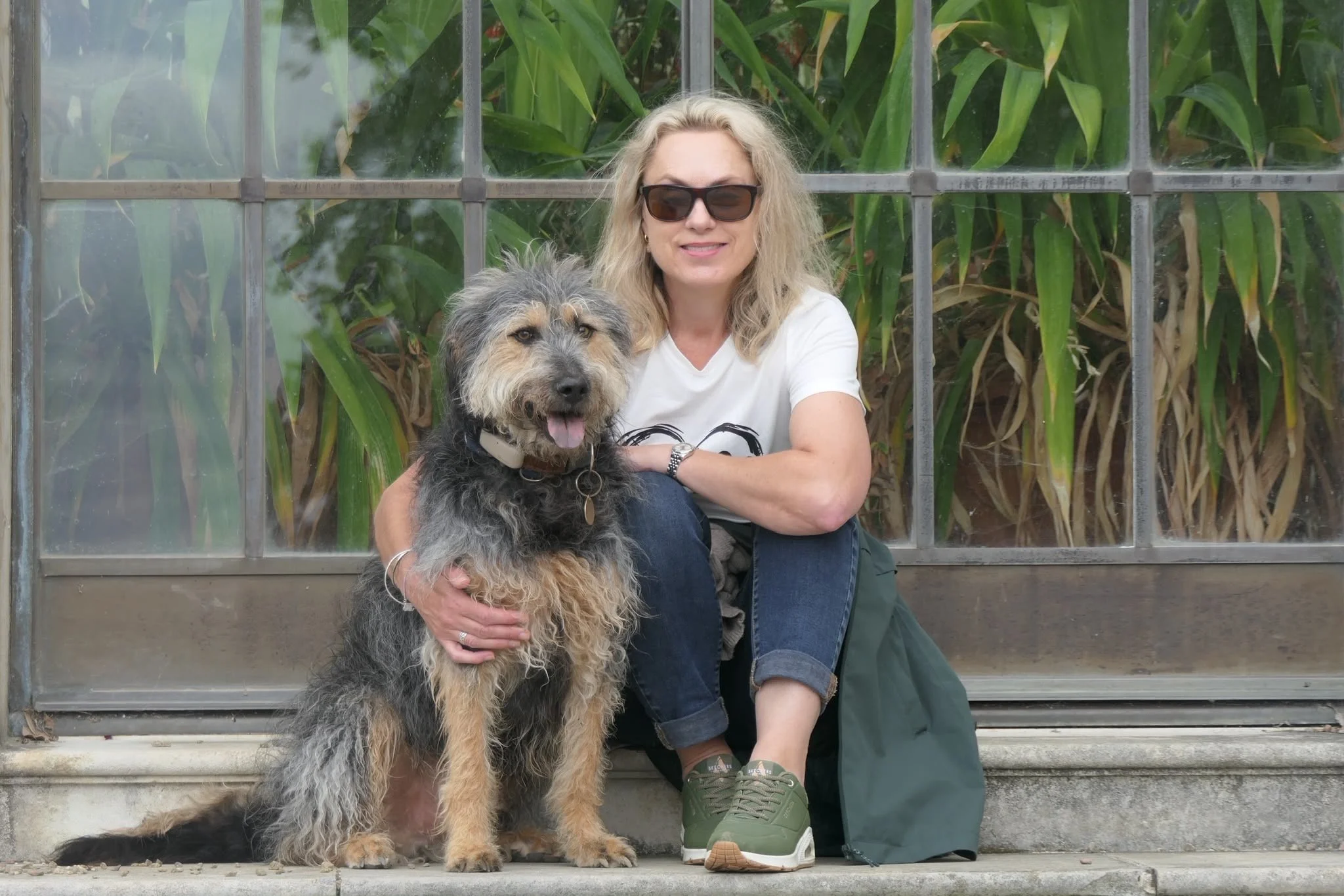
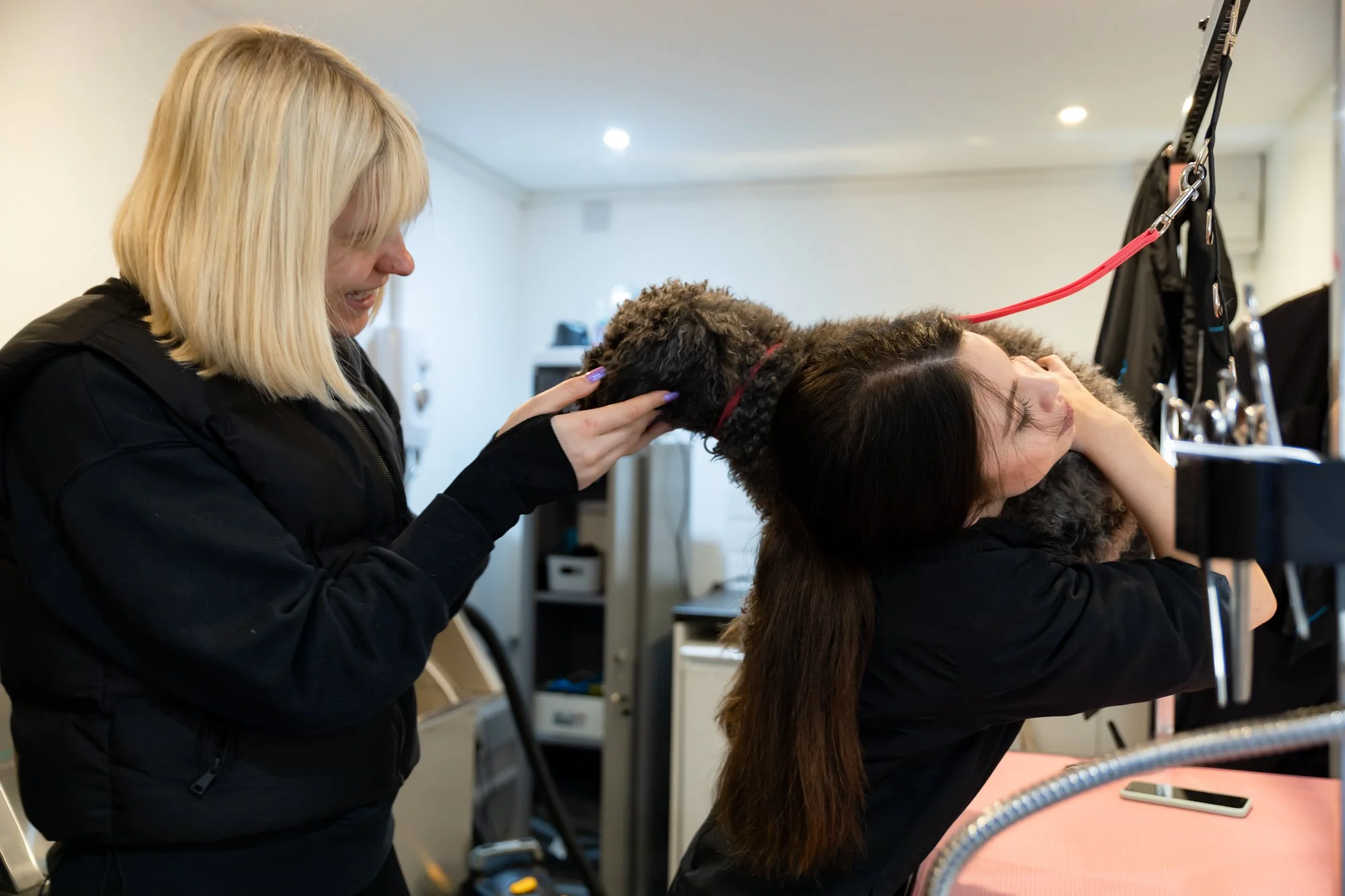
If you'd like more simple training advice you can actually use at home, have a nose around the rest of the blog, follow The Mojo Method on Instagram and Facebook, or take a look at my upcoming dog-training classes in Worcestershire. 💜🐾