How to Stop Your Dog Reacting on Walks (Without Harsh Corrections)
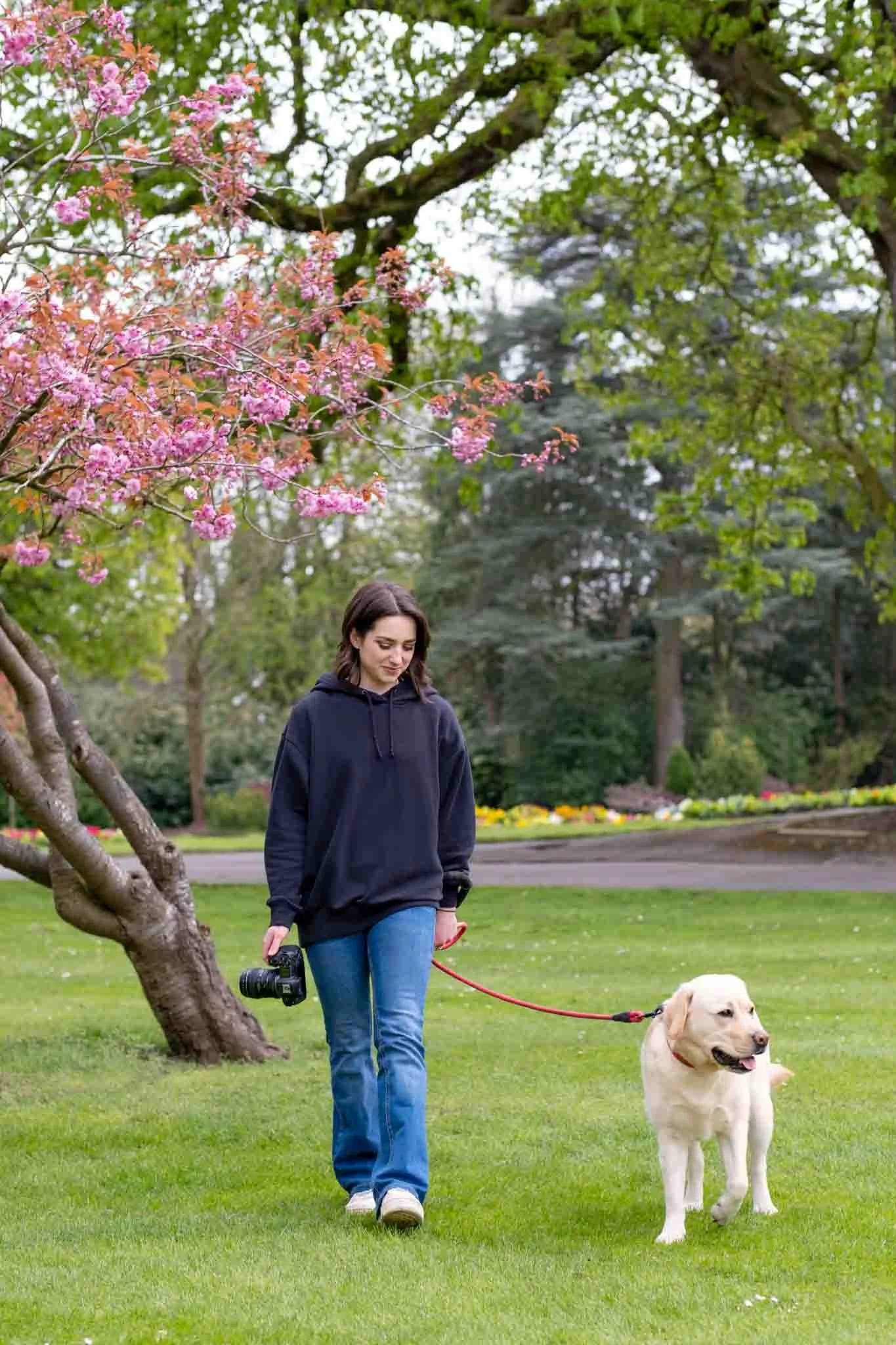
You’re halfway through your walk, everything’s peaceful — and then your dog spots another dog.
In seconds, they’re barking, lunging, or pulling toward them.
You freeze, embarrassed and frustrated, wondering why your “calm” dog suddenly turns into a whirlwind.
Sound familiar? You’re not alone — and your dog isn’t being “naughty.” They’re communicating.
What Reactivity Really Is
Reactivity is an emotional response, not a dominance issue.
It’s often driven by fear, frustration, or overexcitement — sometimes all three.
When a dog reacts, their nervous system has gone into survival mode.
Their body floods with adrenaline, their focus narrows, and they can’t take in cues, treats, or your voice.
Punishing that reaction doesn’t solve it — it only adds fear to an already stressful moment.
Spot the Signs Before They Explode
Before barking or lunging starts, most dogs show subtle warning signs like:
Stiffening or freezing when they spot a trigger
Intense staring or wide, hard eyes
Tense mouth or lifted tail
Moving in slow motion, then suddenly lunging forward
Learning to notice these micro-signs gives you time to act before things escalate.
Create Space and Safety
If your dog reacts on walks, your first job isn’t to train — it’s to make them feel safe.
Try this:
Step off the path or move behind a parked car or hedge to create distance.
Use calm body language — no tension on the lead, no sudden movements.
Speak softly or even just breathe slowly — dogs mirror our energy.
Reward calm choices, like looking back at you or disengaging from the trigger.
With repetition, your dog learns: “I can trust my human to handle this.”
Train the Calm, Connected Way
Once your dog feels safe, you can begin gentle desensitisation and counter-conditioning:
Start at a distance where your dog notices the trigger but stays relaxed.
Pair the sight of the trigger with calm praise, gentle tone, or a reward (high value food like chicken often does the trick!)
Gradually close the distance over multiple sessions — never rushing before your dog is ready.
End before your dog becomes overwhelmed.
This builds new emotional pathways: trigger = calm + reward, not fear + reaction.
The Mojo Method Philosophy
At The Mojo Method, we focus on understanding over control.
A reactive dog isn’t broken — we just need to understand why they are reacting to whatever it is that’s triggering a response
By creating calm, connection, and clarity on every walk, you turn stressful moments into opportunities for trust.
If walks currently feel tense or unpredictable, don’t lose hope — your dog’s reactivity is just communication waiting to be understood.
🐾 Want personalised help to rebuild calm walks? Book a free discovery call with me to set up 1:1 sessions tailored to your dog’s triggers, confidence level, and your pace.