Is Pack Mentality a Thing in Domestic Dogs?
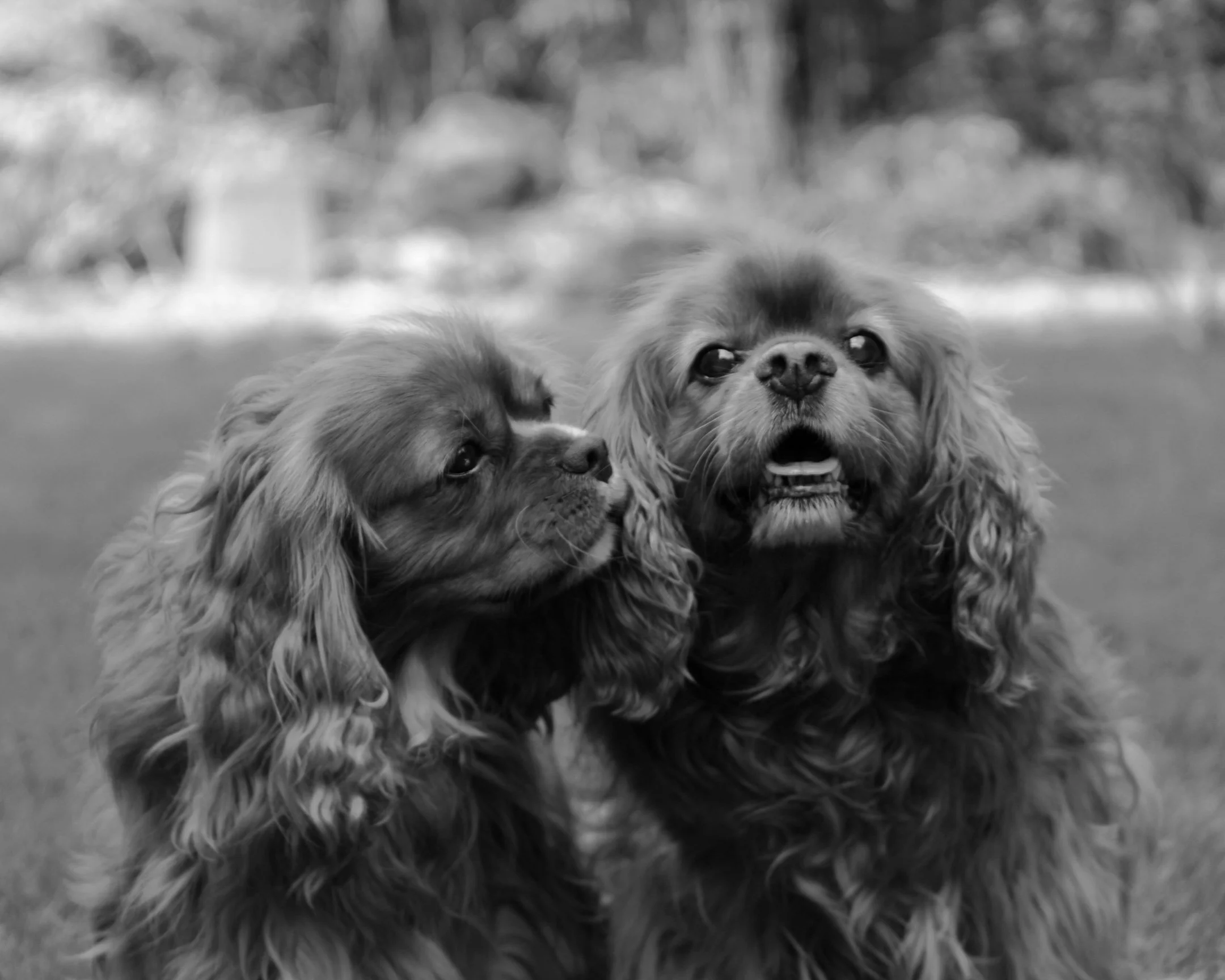
We’ve all heard it — “They’re a pack; you just need to be the alpha.”
But modern behavioural science paints a very different picture.
While dogs do have social structures and relationships, the idea of a strict “pack hierarchy” led by a dominant alpha doesn’t really apply to domestic dogs living in homes.
Let’s look at why — and what really matters in multi-dog dynamics.
Where the “Pack” Idea Came From
The concept of pack mentality came from early wolf studies in the 1930s and 40s.
Researchers observed unrelated wolves in captivity and assumed they organised themselves through constant dominance and submission.
But later field research found that wild wolf packs aren’t structured around dominance at all — they’re family groups. Parents lead through example, not force.
Our domestic dogs evolved alongside humans, not inside wolf packs.
Their success as a species came from their social flexibility — the ability to cooperate with us, read our emotions, and live peacefully in mixed social groups.
So Do Multi-Dog Homes Have a Pack?
Kind of — but not in the way people think.
Dogs living together form social groups, not rigid packs.
They build relationships based on personality, age, and resource access — not dominance.
You might see one dog consistently take the lead on walks or claim a preferred resting spot, but that doesn’t make them “alpha.” It simply reflects social negotiation and comfort zones.
Do Multi-Dog Households Ever Form a Pack “Against” Their Owners?
This is a really common worry — especially when two dogs seem to ignore you together or “feed off” each other’s excitement. It can look like they’re teaming up against you, but in reality, it’s not rebellion — it’s emotional contagion.
Dogs are emotional, social learners. When one gets over-aroused, the other often mirrors it.
That’s not a plan — it’s a stress response.
So if your dogs suddenly seem to act “as a team” during chaos — barking at the window, chasing wildlife, or ignoring recall — they’re not plotting. They’re simply responding to each other’s energy faster than they can respond to you.
Your role isn’t to dominate that dynamic — it’s to anchor it.
Bring the energy down, redirect calmly, and provide structure so both dogs learn that calmness begins with you.
Can Dogs in the Same Household Form a Pack Against Other Dogs?
Sometimes two dogs in the same home appear to “team up” against another dog — particularly on walks or during introductions.
It might look like coordinated behaviour, but again, it’s emotional mirroring, not hierarchy.
When one dog reacts, the other often joins in instinctively. It’s a shared stress response — not a strategy.
This is most common when:
One dog is confident or reactive, and the other follows their lead.
The dogs share a strong bond but lack clear human guidance.
There’s lead tension or high arousal energy.
The solution isn’t to separate or punish — it’s to restore balance and clarity:
Train each dog individually
Reward calm focus on you, not the environment.
Interrupt rising excitement early, using calm energy and distance.
Reinforce calm coexistence instead of overcorrecting reactivity.
When your dogs learn to look to you for guidance instead of to each other for emotional cues, you dissolve the illusion of “pack behaviour.”
Reading Their Social Signals
Dogs in multi-dog households communicate constantly — through glances, pauses, posture shifts, or subtle movements.
Healthy dynamics include:
Taking turns with toys or resting spaces
Fluid, back-and-forth play
Easy de-escalation when one gets too excited
Red flags include:
Freezing, stiff postures, or hard stares
Resource guarding or blocking movement
One dog constantly avoiding or leaving the room
Understanding these signals lets you intervene early — calmly — before things escalate.
Your Role: The Calm Constant
Your dogs don’t need an alpha — they need you to be their calm, consistent leader.
That means setting routines, managing excitement, and rewarding calmness.
When you provide structure and predictability, dogs naturally relax and stop relying on each other for direction.
The Mojo Method Approach
At The Mojo Method, we focus on calm, connection, and clarity — not control.
Your dogs don’t form packs against you or others; they simply mirror emotion and energy.
By leading with calm consistency, you create harmony — not hierarchy.
So, do domestic dogs form packs?
Not in the old “alpha” sense.
They form families, friendships, and social bonds that thrive under calm, fair guidance.
🐾 Need help bringing balance to your multi-dog household?
Book a 1:1 course with me learn how to create harmony through calm, connection, and clarity.