Loose Lead Walking — How to Teach Calm, Connected Walks
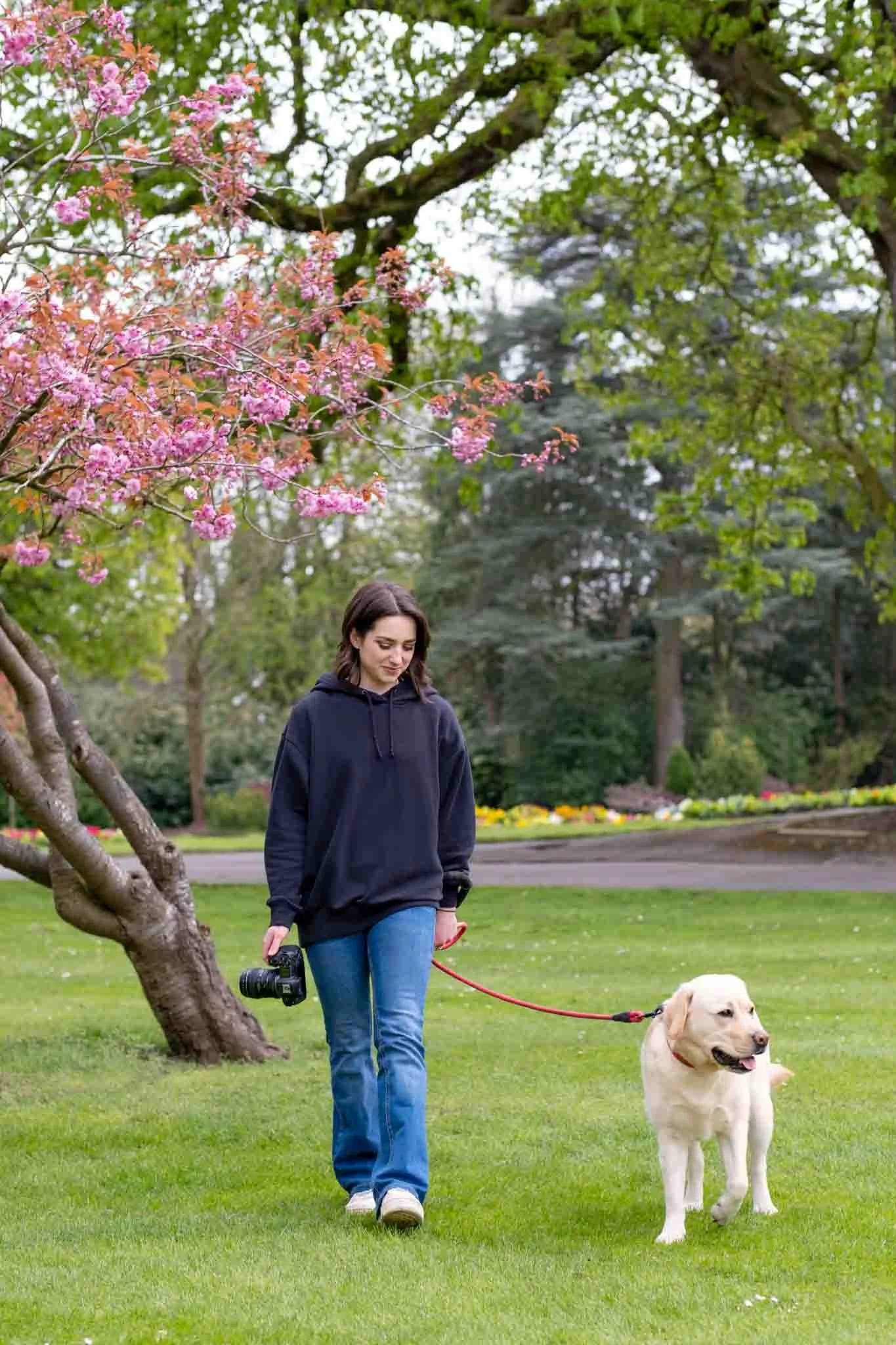
If there’s one skill that transforms daily life with your dog, it’s loose lead walking.
It’s not about control or dominance — it’s about partnership.
When your dog learns that walking beside you feels calm, rewarding, and predictable, you stop battling the lead and start enjoying the journey together.
What Loose Lead Walking Really Means
Loose lead walking isn’t a perfect heel position.
It’s simply your dog walking beside you on a slack lead — neither pulling ahead nor lagging behind — while calmly tuned into you.
The more consistent and predictable your responses are, the more your dog will choose to stay close naturally.
Why Dogs Pull
Dogs pull because… it works.
Pulling gets them where they want to go faster, and many owners accidentally reinforce it by following along.
Other reasons include:
Excitement and overstimulation
Lack of decompression before the walk
Using restrictive or uncomfortable equipment
Inconsistent rules or tension on the lead
Your dog isn’t being naughty — they’re simply responding to their environment (and your lead pressure).
Start in the Right Environment
Before stepping onto a busy pavement, practise indoors or in the garden where distractions are minimal, and work your way up. In dog training we call this “upping the criteria” — listen to your dog, once they have grasped it in your house, move into the garden, and then a quiet park…
Loose lead walking is a muscle memory skill — the calmer the learning environment, the faster it sticks.
Once your dog can maintain a loose lead in calm spaces, gradually introduce new environments one step at a time.
The Power of Repetition and Timing
Loose lead walking isn’t learned in one session.
It’s built through hundreds of small moments where your dog realises:
“Staying close to you feels good.”
Each time your dog walks beside you and the lead remains slack — mark and reward.
If they pull, stop and wait for calm before continuing.
This way, your dog learns that forward motion itself is the real reward — not just food.
Consistency is everything.
Every step is a message.
Tools That Help (and Those That Don’t)
🦮 Helpful:
Well-fitted harness with front and back attachments
Comfortable lead (not retractable)
High-value treats or favourite toy
🚫 Not helpful:
Prong collars
Harsh tone of voice
Constant tension
Equipment should support learning, not suppress behaviour.
Connection Over Control
I teach loose lead walking through calm connection — not confrontation.
Your dog learns to tune into your pace, energy, and direction through positive associations, not pressure. It’s about gaining their focus on you.
When your walks become predictable, calm, and rewarding, pulling naturally fades away.
It’s not magic — it’s repetition, patience, and clear communication.
The Mojo Method Approach
Lead walking is more than a mechanical exercise — it’s a mirror of your relationship.
If your dog is calm beside you, it’s because they trust your rhythm.
Through gentle guidance, rewarding focus, and regulating excitement, loose lead walking becomes second nature.
A calm, connected walk is a life skill any dog can learn with the right balance of clarity and consistency.
🐾 Want to enjoy relaxed, stress-free walks with your dog?
Book a 1:1 session with The Mojo Method and discover how to turn pulling into partnership.