Why Play Is So Important for Your Puppy
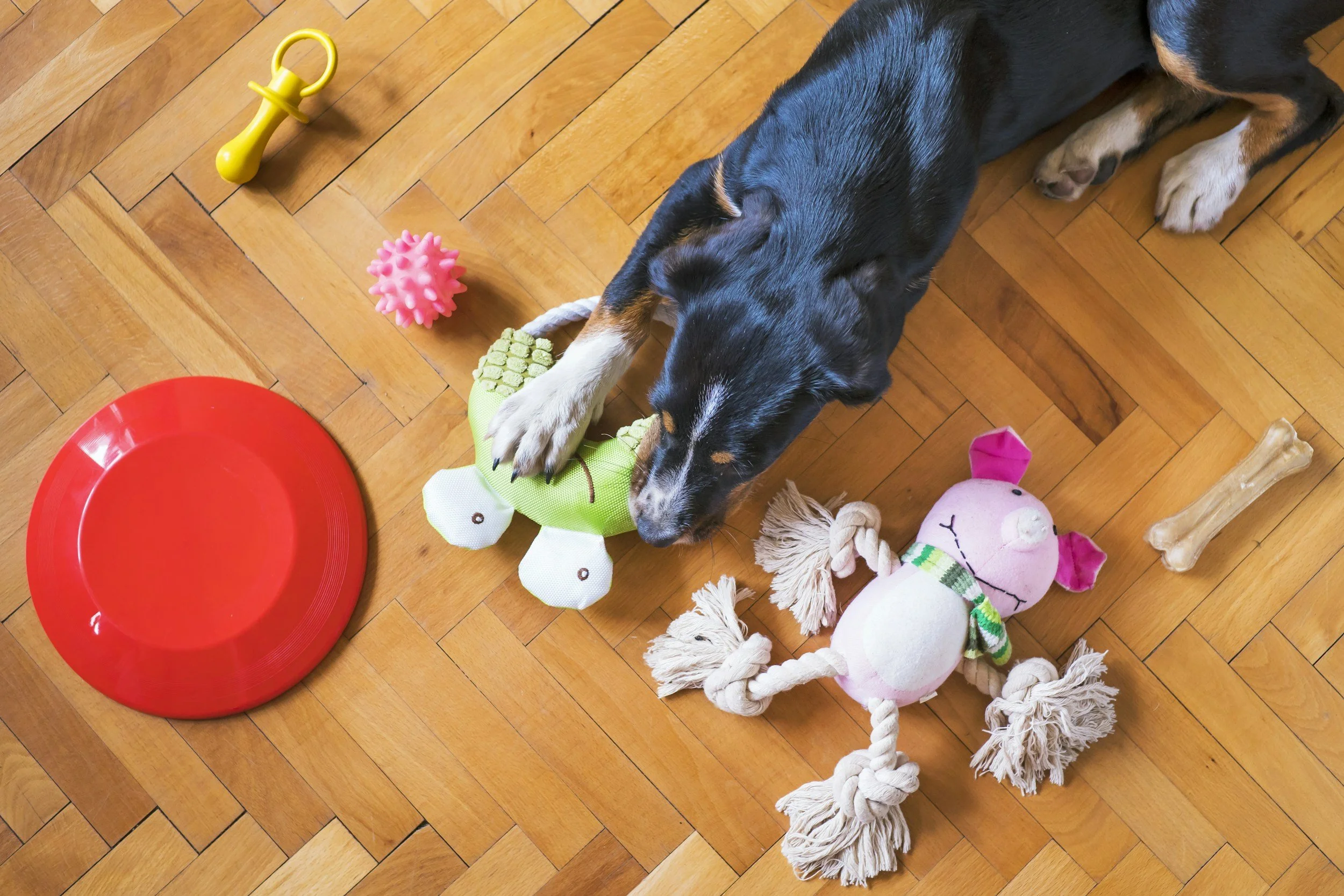
When we think about raising a happy, well-rounded puppy, our minds often jump straight to training: teaching sit, recall, loose lead walking and all those important everyday skills. But there’s something else that plays a huge part in your puppy’s development — play!
Playing might look like your puppy is simply having fun (and they are!), but there’s actually a lot of learning happening at the same time. From building confidence and developing coordination to strengthening their relationship with you, play is an incredibly valuable part of puppyhood.
So, why is play so important for puppies?
Play helps puppies learn about the world
Your puppy is experiencing an enormous number of new things during their first few months of life.
Different surfaces, sounds, objects, movements, people and environments all need to be explored and understood. Play gives puppies an opportunity to investigate their surroundings in a way that feels fun and rewarding.
Something as simple as chasing a toy, figuring out how to get food from an enrichment toy or exploring a new object can encourage curiosity and problem-solving.
Positive experiences like these can help your puppy become more confident when approaching new situations as they grow.
Play develops coordination and body awareness
Puppies aren't born with perfect control over those growing legs!
Running, chasing, tugging, turning and interacting with different toys all give puppies opportunities to practise using their bodies.
Appropriate play can help develop coordination and body awareness while allowing your puppy to explore movement naturally.
Just remember that growing puppies don't need intense exercise. Keep play appropriate for your puppy's age and give them plenty of opportunities to rest.
Playing together strengthens your relationship
One of my favourite reasons to play with your puppy is incredibly simple: it's fun for both of you.
Training isn't the only way we communicate with our dogs. Spending time playing together helps your puppy learn that interacting with you is enjoyable and rewarding.
That relationship becomes incredibly useful during training too.
If your puppy thinks you're worth paying attention to, engaging with you becomes much easier — whether you're practising recall in the park or simply asking for their attention around distractions.
You don't always need to be the person saying “no, leave that!”
Sometimes you get to be the most fun person in the room too!
Play can be a brilliant training reward
When we talk about positive reinforcement training, people often immediately think of treats.
Food is a fantastic training tool, but rewards don't always have to be edible.
For a puppy who absolutely loves their favourite toy, a quick game of tug or the opportunity to chase a toy can become a really valuable reward.
Imagine calling your puppy back to you and, instead of the fun ending when they arrive, you produce their favourite toy and have a quick game together.
Coming back to you suddenly becomes part of the fun.
Learning what your individual puppy finds rewarding gives you more options when you're training and can make sessions much more engaging.
Play can help puppies practise self-control
It's easy to think that successful puppy play means tiring them out as much as possible.
It doesn't.
In fact, learning how to come back down from excitement is just as valuable as the play itself.
You can build little moments of calm into your games. For example, during tug you might briefly pause the game before starting again, or practise exchanging a toy before returning it.
Over time, your puppy begins learning that excitement doesn't have to mean completely losing their head!
Being able to move between exciting activities and calmer behaviour is a really useful life skill.
Independent play matters too
Playing with your puppy is brilliant, but you don't need to entertain them every second they're awake.
Learning to occupy themselves appropriately is important too.
Safe chews, enrichment toys, food toys and puppy-appropriate toys can give your puppy something enjoyable to do without constantly relying on you for entertainment.
That balance is important.
We want our puppies to love interacting with us while also developing the confidence to settle and entertain themselves.
What should I play with my puppy?
You don't need an enormous toy box or complicated games.
Try experimenting with different types of play and see what your puppy enjoys. You could try:
A gentle game of tug
Chasing or retrieving a toy
Searching for hidden treats
Sniffing and scatter-feeding games
Food or puzzle toys
Exploring different safe objects and textures
Short training games mixed into play
Playing together with your puppy's favourite toy
Every puppy is different. One might do absolutely anything for a tennis ball while another couldn't care less about it but thinks a tug toy is the greatest invention in history.
Pay attention to what makes your puppy light up.
Play should be fun. This is an important one.
There doesn't need to be a training goal behind every interaction you have with your puppy.
Sometimes you should play with them simply because you both enjoy it.
But it's lovely to recognise that while you're throwing that toy, playing tug or watching your puppy enthusiastically investigate something new, they're developing skills that can help them throughout their life.
Play can build confidence, encourage problem-solving, strengthen your relationship and even become one of your most valuable training tools.
So next time your puppy brings you their favourite toy?
Maybe say yes. 🐾
Looking for puppy training in Worcestershire?
If you'd like some help giving your puppy the best possible start, The Mojo Method Puppy Foundations classes are designed to teach practical, real-life skills using positive reinforcement and clicker training.
We cover essential puppy skills including focus, recall, loose lead walking, impulse control, settling and more — while helping you understand how your puppy learns, not simply what to ask them to do.
Click Here to find out more about Puppy Foundations and upcoming classes, or get in touch to see how I can help you and your puppy!